Printable Preschool March Daily Math
File Type: Digital PDF
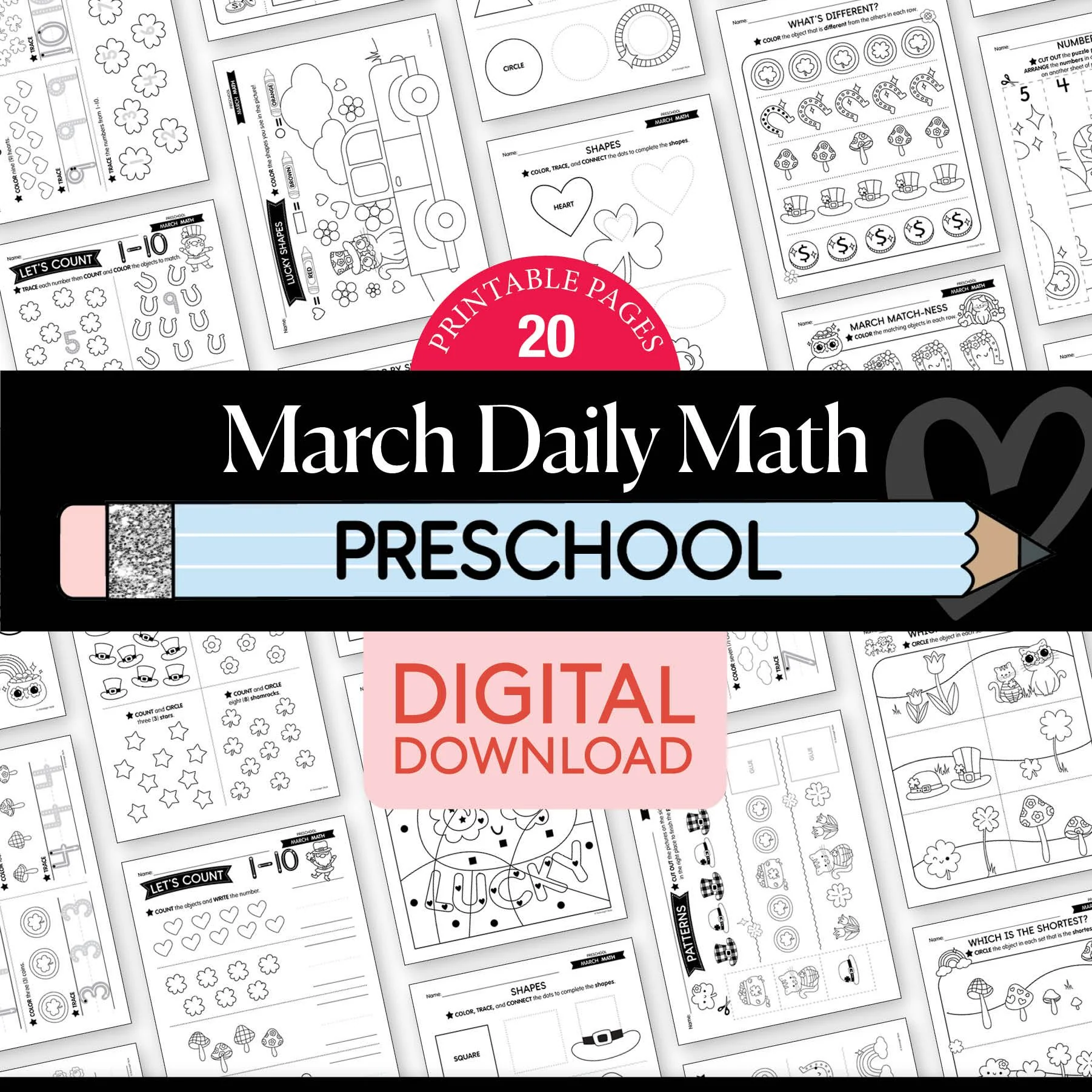
Page Count: 20 pages
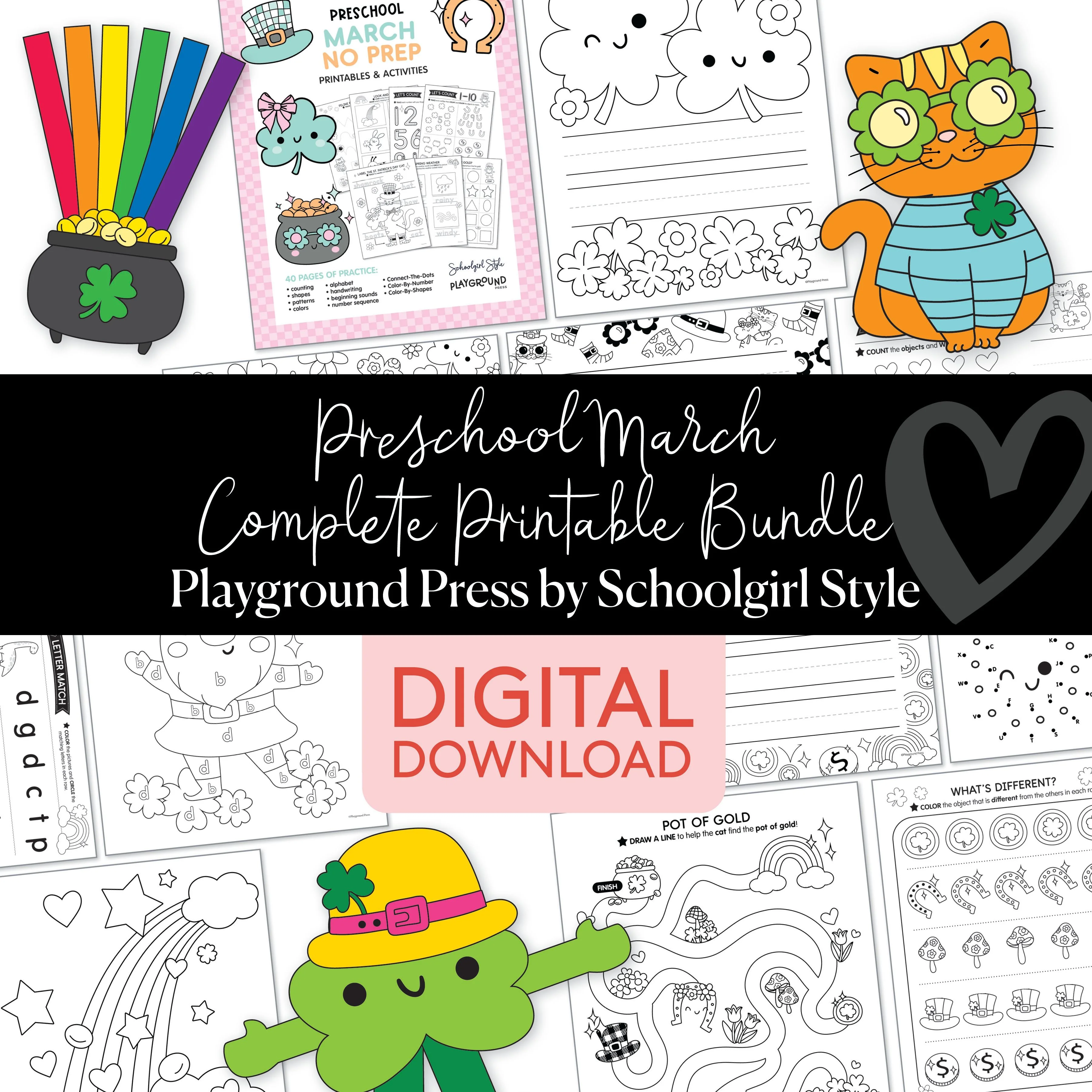
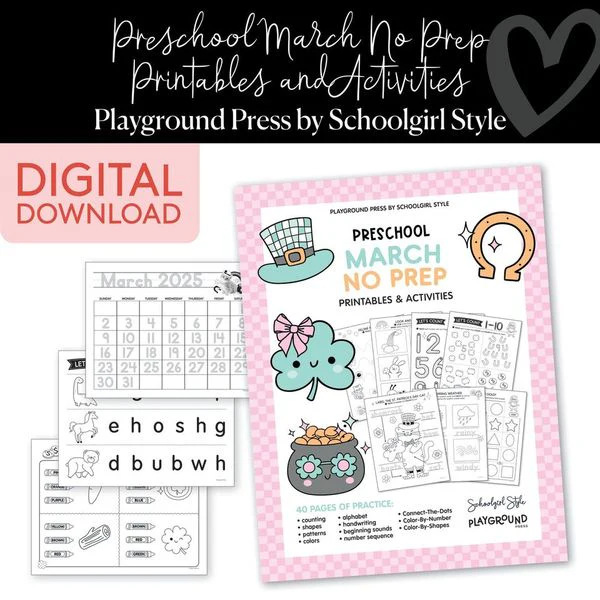
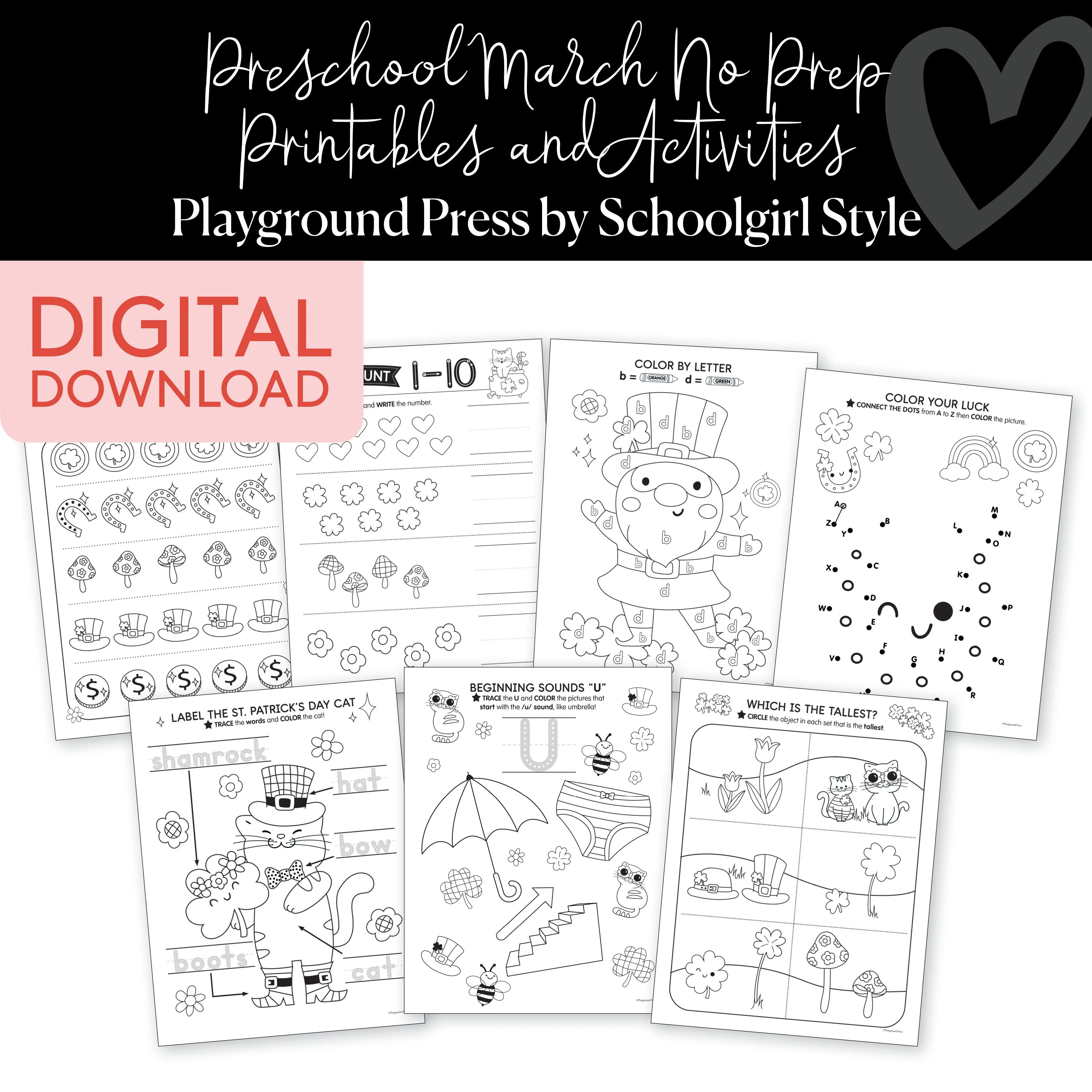
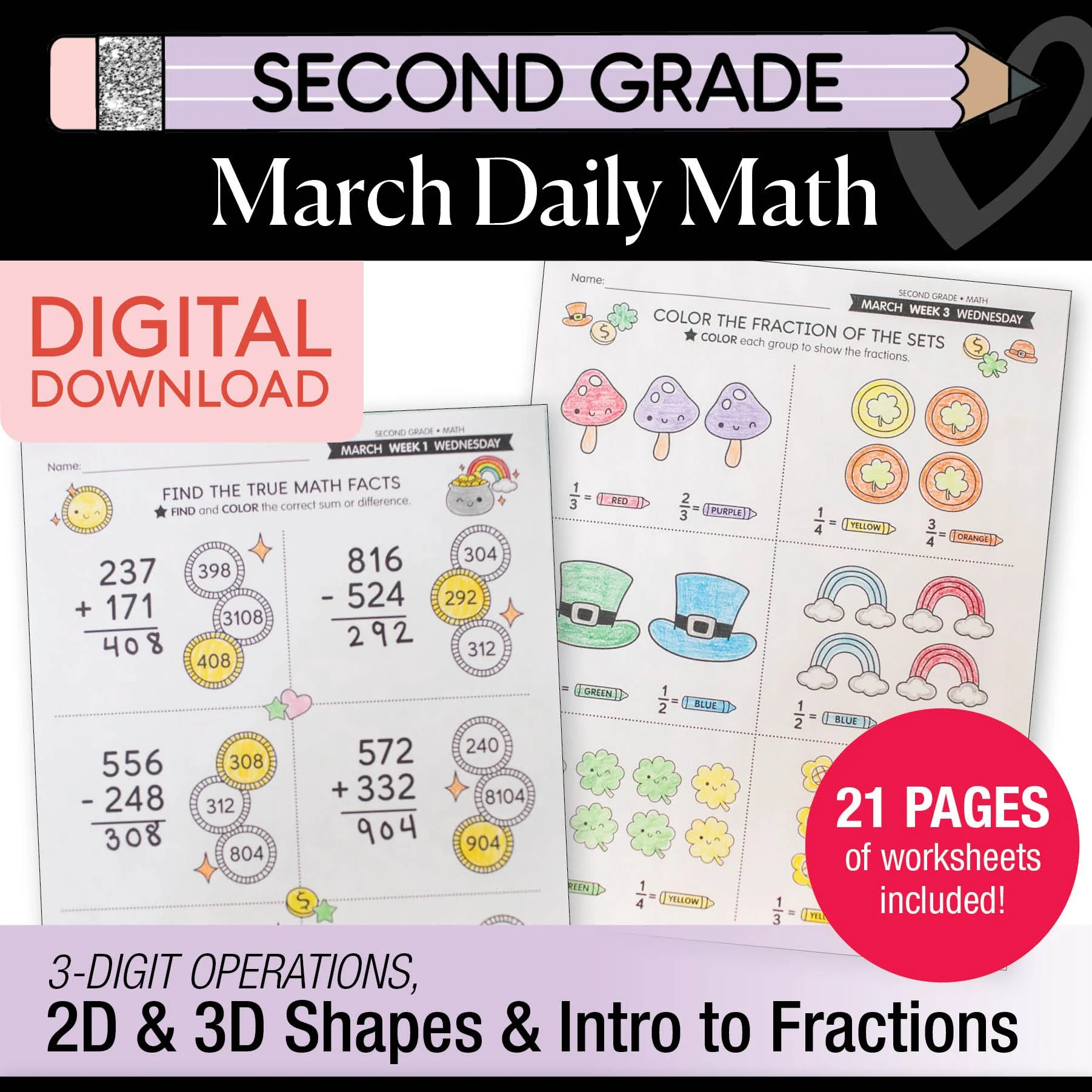
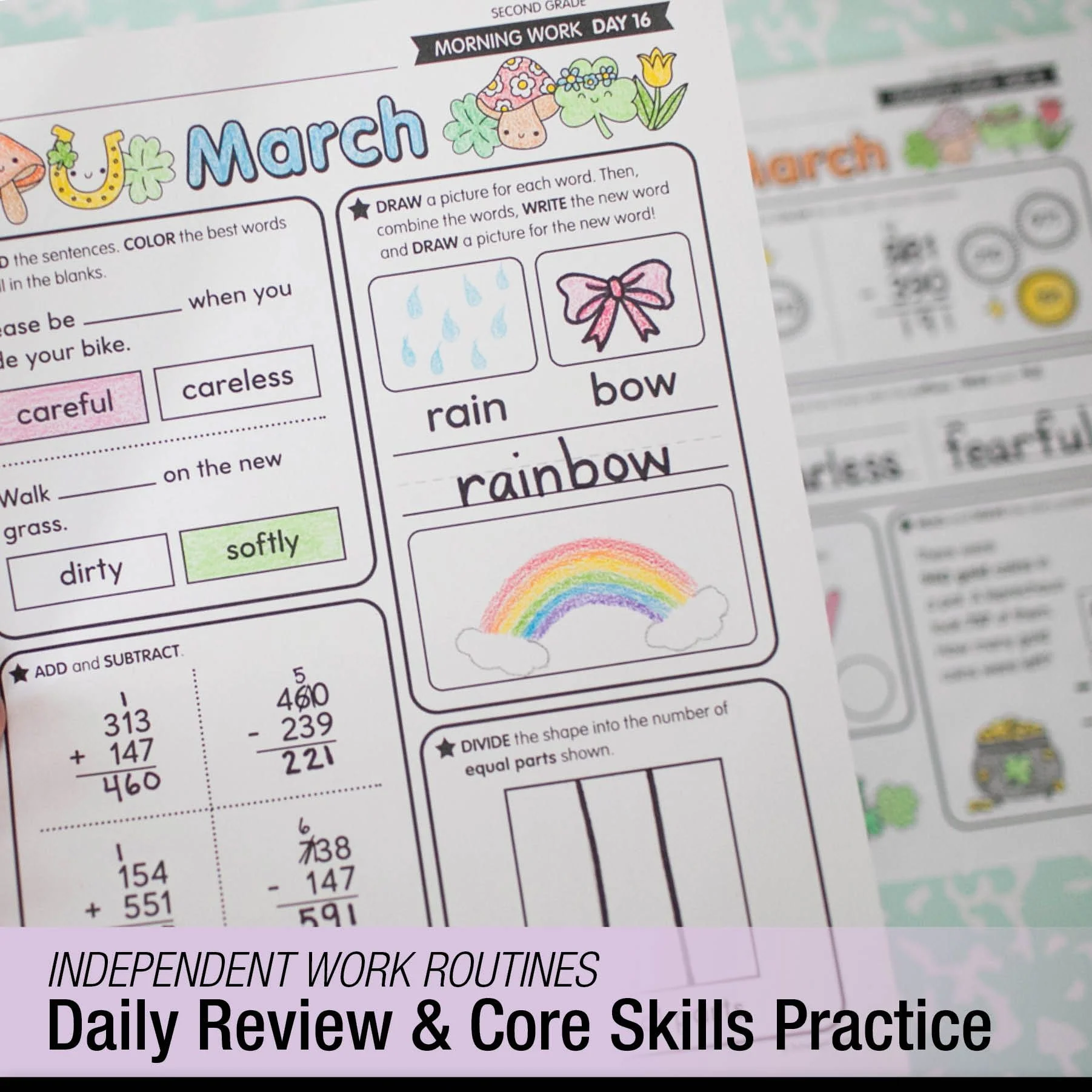
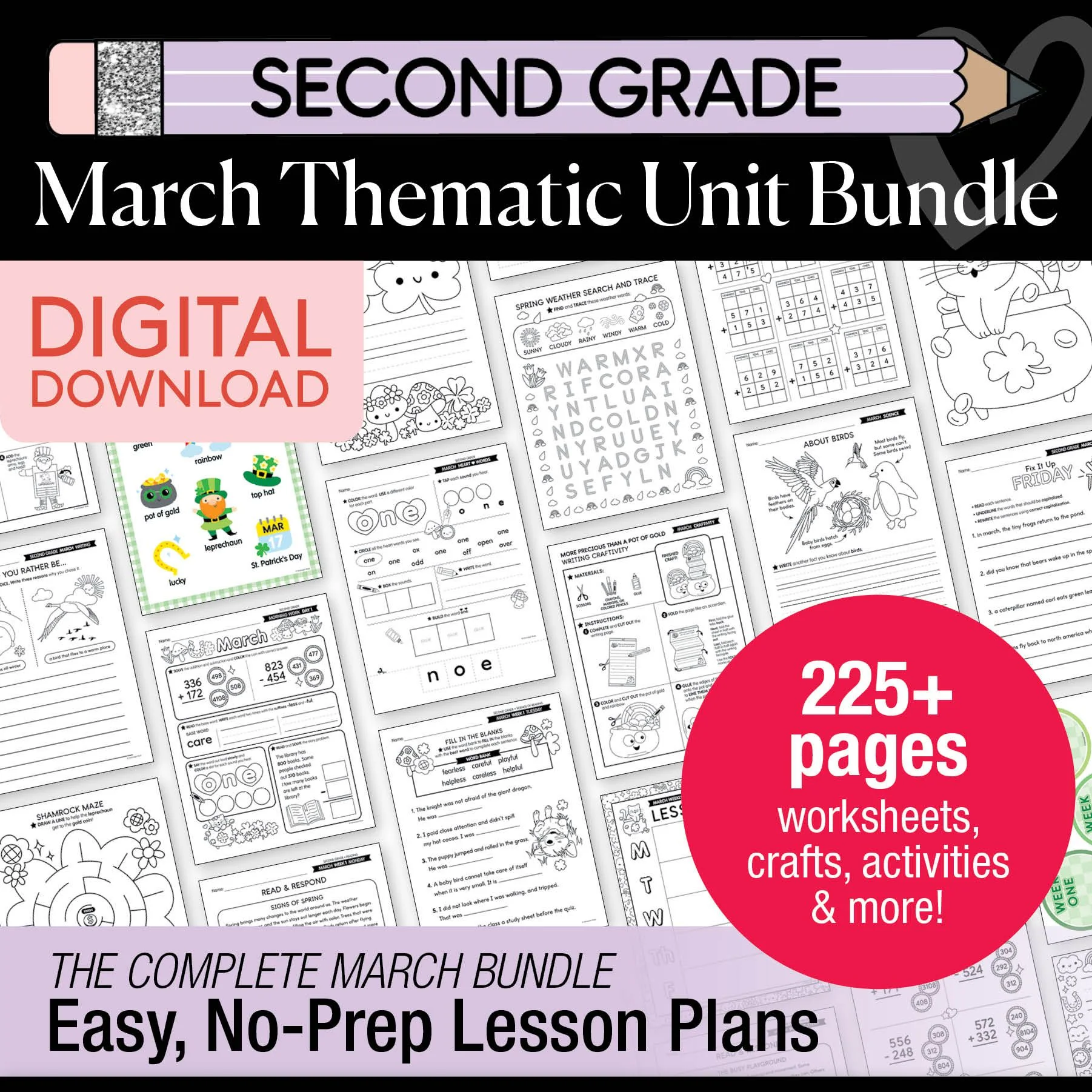
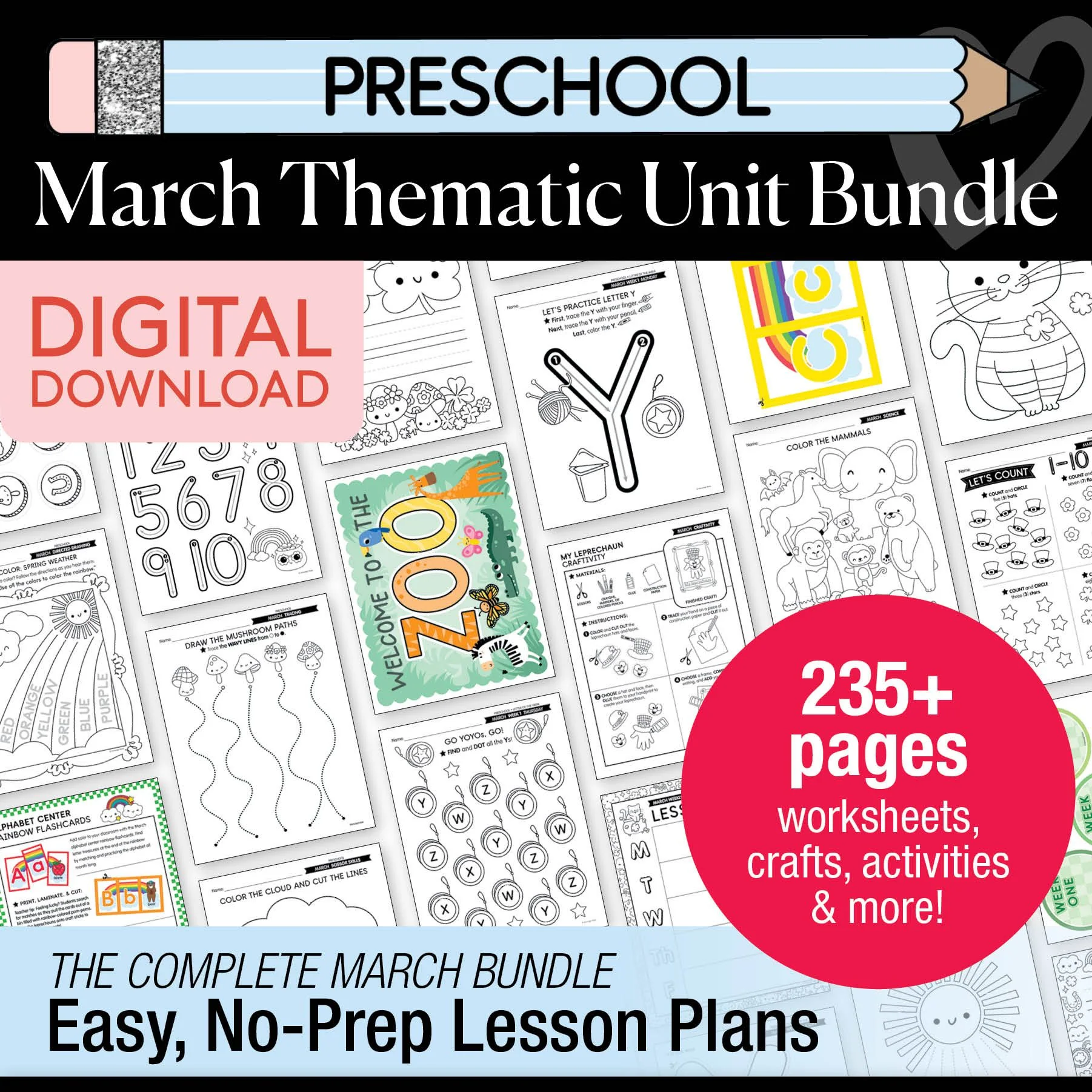
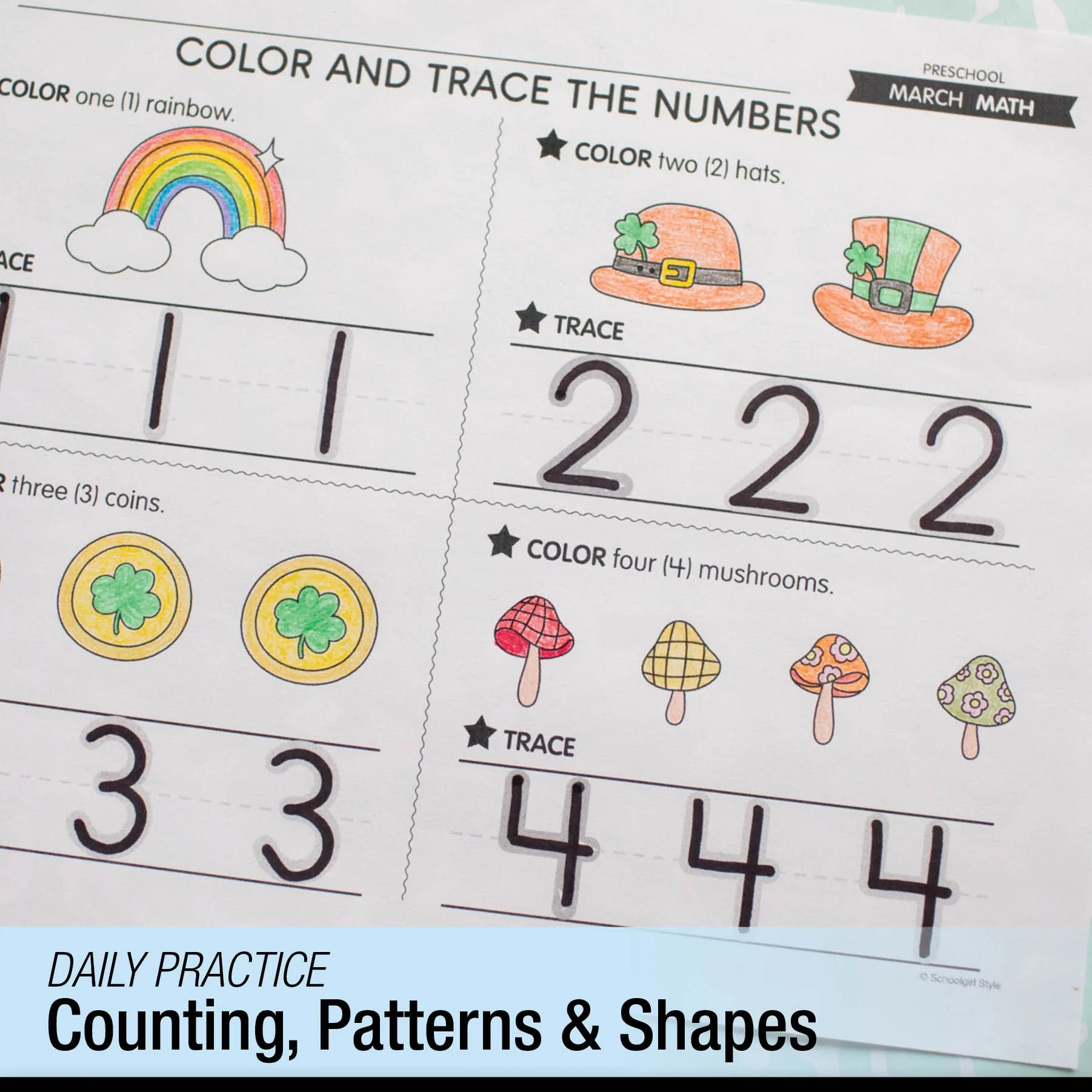
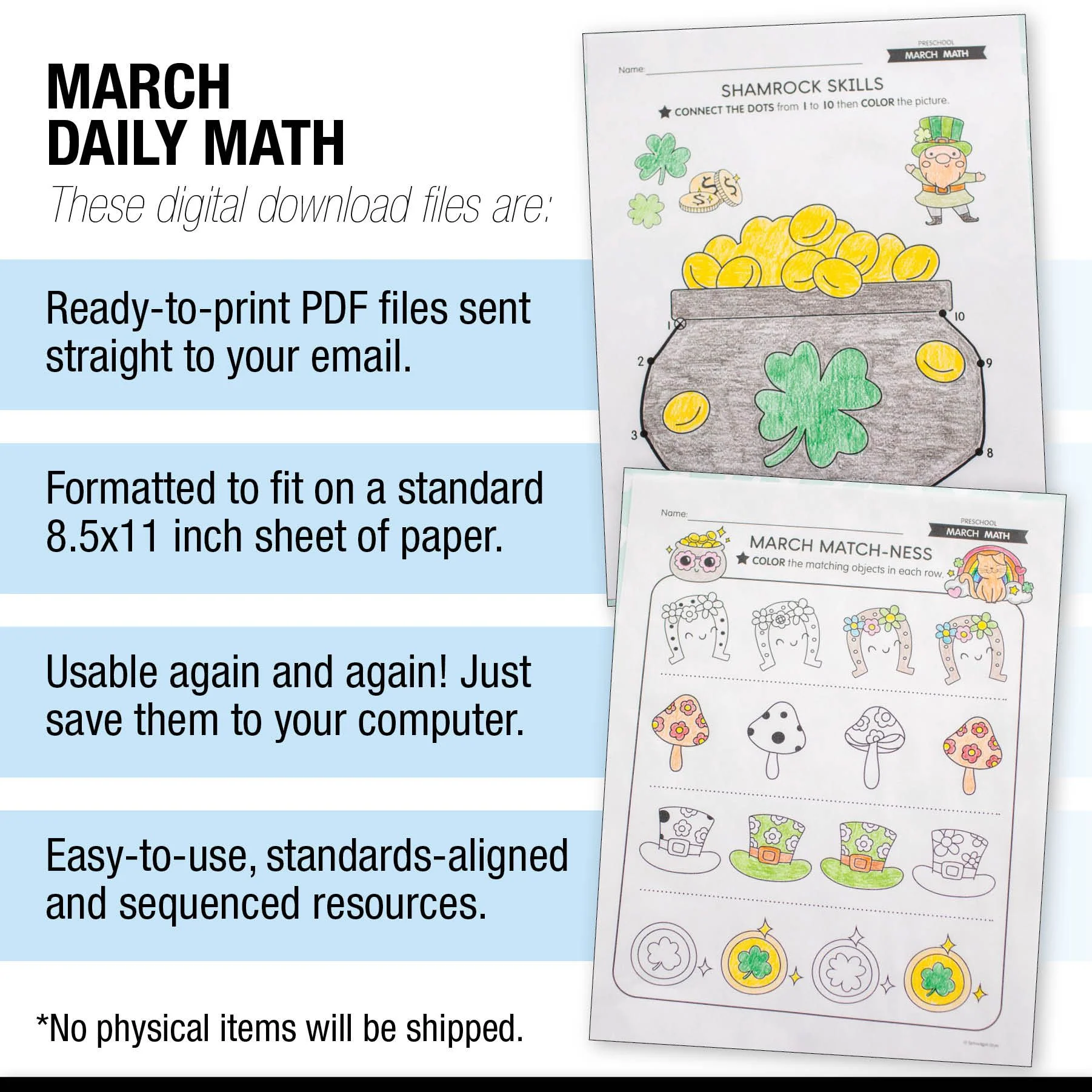
Make math time hands-on, consistent, and full of spring fun with our Printable Preschool March Daily Math pack! This no-prep resource gives your preschoolers meaningful daily practice with counting 1–10 through engaging activities like coloring, tracing, number writing, puzzles, and connect-the-dots.
Throughout the month, little learners will also explore shapes, build patterning skills, and compare attributes like same/different and tall/short—all in a developmentally appropriate, routine-based format that keeps math simple and effective.
Perfect for morning work, math centers, small groups, or independent practice. Just print and go for easy March math success!
Skills This Resource Targets:
-
Counting and number recognition (1–10)
-
Number formation and tracing
-
Shape identification
-
Pattern recognition
-
Comparing attributes (same/different, tall/short)
-
Fine motor skills and pencil control
-
Early problem-solving and logic
Original: $5.00
-65%$5.00
$1.75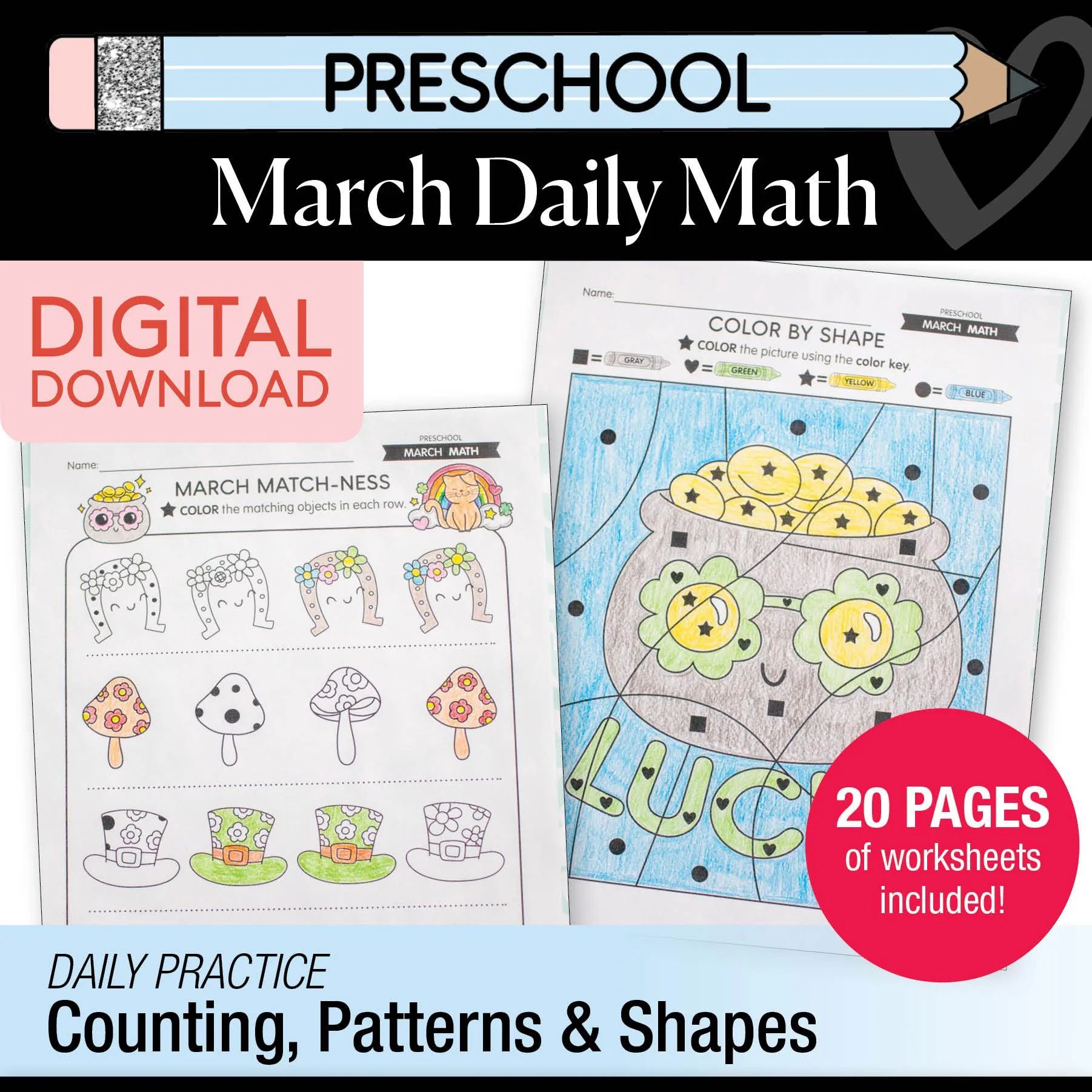
Description
File Type: Digital PDF
Page Count: 20 pages
Make math time hands-on, consistent, and full of spring fun with our Printable Preschool March Daily Math pack! This no-prep resource gives your preschoolers meaningful daily practice with counting 1–10 through engaging activities like coloring, tracing, number writing, puzzles, and connect-the-dots.
Throughout the month, little learners will also explore shapes, build patterning skills, and compare attributes like same/different and tall/short—all in a developmentally appropriate, routine-based format that keeps math simple and effective.
Perfect for morning work, math centers, small groups, or independent practice. Just print and go for easy March math success!
Skills This Resource Targets:
-
Counting and number recognition (1–10)
-
Number formation and tracing
-
Shape identification
-
Pattern recognition
-
Comparing attributes (same/different, tall/short)
-
Fine motor skills and pencil control
-
Early problem-solving and logic